Pest Control Service in Rock delivers comprehensive structural protection by targeting foundational entry points, sub-slab voids, and roofline overhangs across residential properties. Property owners seeking pest control service near me receive complete exterior physical barrier assessments alongside targeted interior applications.
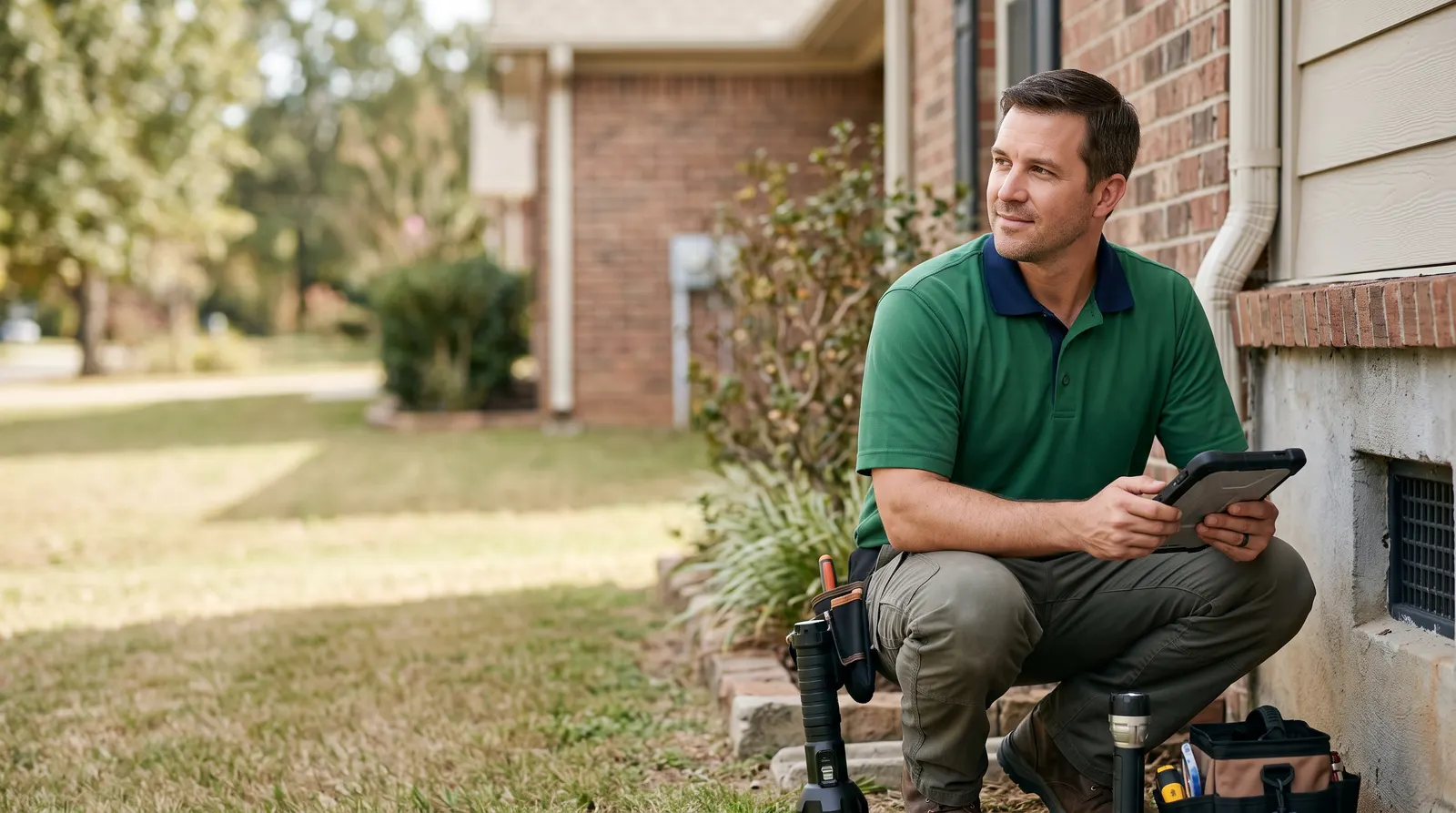
Pest Control Service in Rock is an integrated structural defense and targeted extermination process that eliminates active wood-destroying, crawling, and flying insect populations while mechanically sealing entry points against future perimeter breaches.
Every service reflects the same meticulous attention to detail, whether it's a single job or a larger pest control service project across Rock.
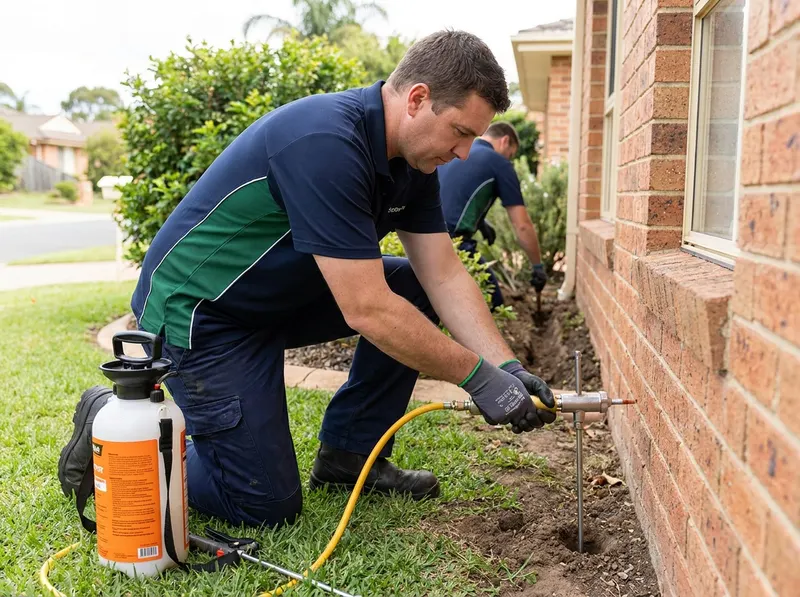
Subterranean termite management requires continuous chemical barriers along foundation footings. Liquid non-repellent termiticide is injected through concrete slabs, drilled into hollow foundation blocks, and trenched into exterior perimeter soil to prevent worker termites from accessing structural sill plates and stud framing. Technicians excavate trenches six inches wide and six inches deep along exterior stem walls, applying four finished gallons of termiticide per ten linear feet to saturate soil down to footings. In homes with post-tension slabs, micro-drilling through perimeter expansion joints protects structural tension cables while bathing hidden sub-slab voids in protective chemistry. This creates an undetectable lethal transfer zone that foraging termites carry back to suppress underground parent colonies across the perimeter.
Get a quote →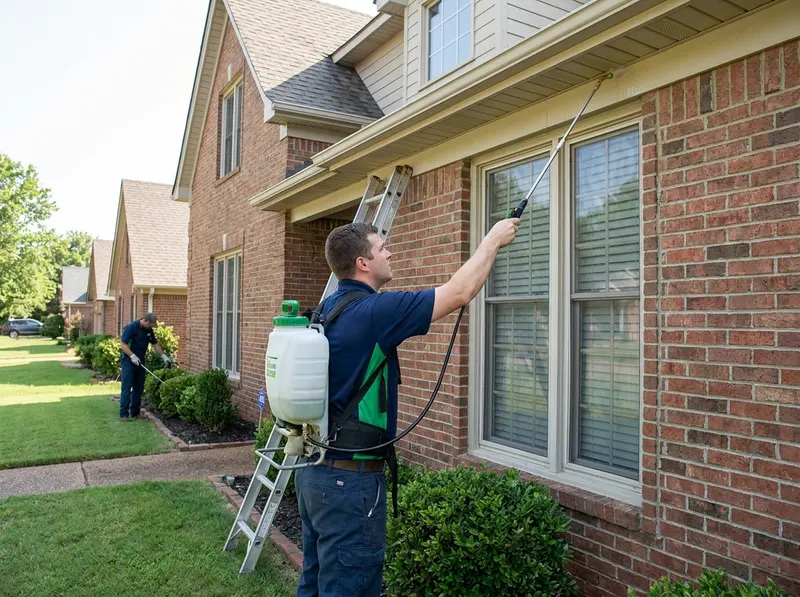
Vertical perimeter protection extends beyond standard ground-level band treatments to reach eaves, fascia boards, gutters, frieze boards, and window headers up to 30 feet high. Technicians sweep away active paper wasp nests, mud dauber tubes, and extensive spider webs using extendable fiberglass poles before applying micro-encapsulated residuals to secondary structural harborage points. This high-elevation defense halts stinging insects from colonizing attic soffit vents and prevents jumping spiders, brown recluse spiders, and wood-boring pests from exploiting roof returns and upper trim gaps. The exterior barrier continues down the wall surface to establish a dense, water-resistant perimeter zone that withstands heavy rainfall without washing into lawn areas.
Get a quote →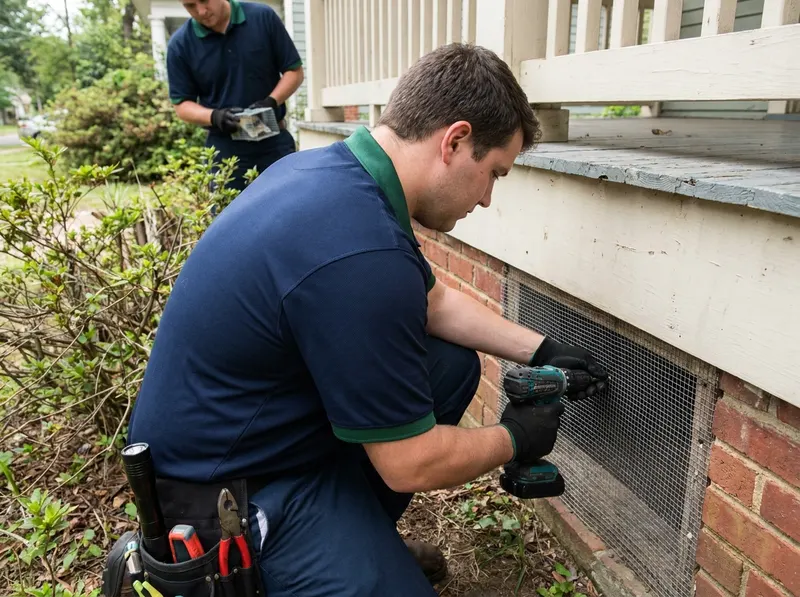
Complete rodent defense combines interior targeted trapping with exterior entry closure. Technicians seal utility pipe gaps, crawl space access doors, foundation vents, and roof returns using 24-gauge galvanized hardware cloth, rustproof copper stuffing mesh, and commercial polyurethane foam to permanently bar roof rats, Norway rats, and field mice. Technicians inspect air conditioning refrigerant lines, electrical conduit entrances, and corner masonry junctions for gnaw marks and grease rub marks. Interior attic zones and crawl space runways are fitted with heavy-duty snap traps set inside tamper-resistant stations to rapidly remove trapped populations without broadcasting toxic rodenticides into living areas or wall cavities.
Get a quote →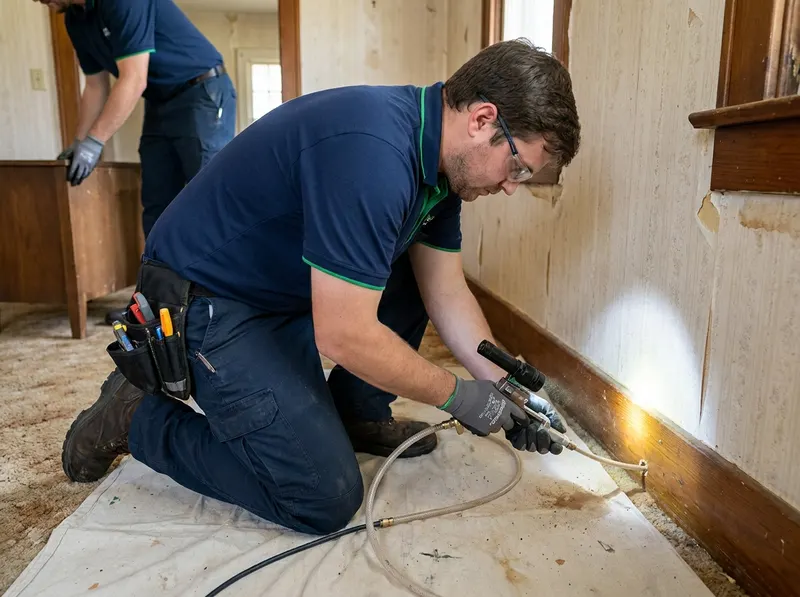
Targeted cockroach eradication focuses on kitchen cabinet chases, appliance motor housings, plumbing penetrations, and false bottom drawers. Technicians apply non-repellent insect growth regulators (IGRs) alongside targeted bait matrices featuring dual active ingredients to halt reproduction, prevent nymphs from molting, and collapse active breeding clusters inside structural voids. Technicians avoid broadcast wet sprays that scatter infestations into adjacent rooms, instead deploying precision micro-injectors behind switch plates, beneath sink basins, and along appliance compressor coils where heat and relative humidity concentrate breeding activity. Follow-up evaluations verify feeding uptake and confirm that egg capsules fail to hatch.
Get a quote →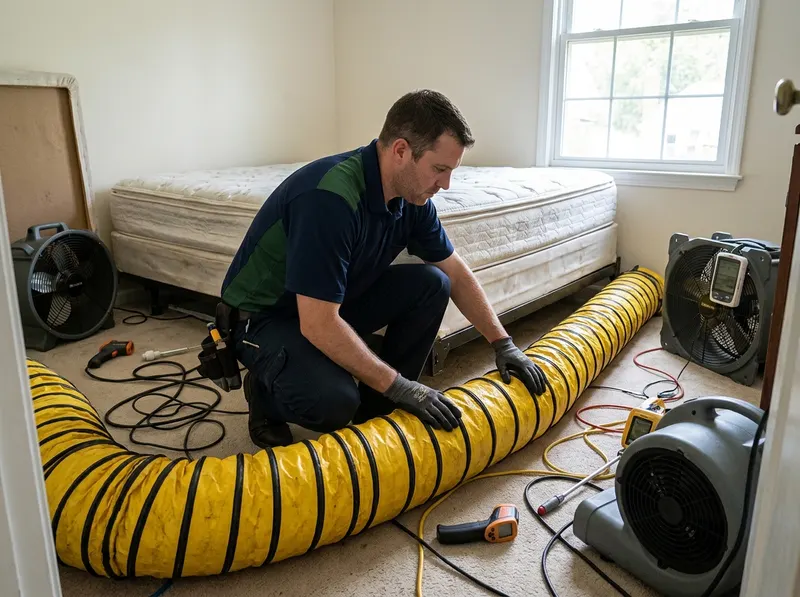
Bed bug intervention involves detailed inspections of mattress seams, box springs, headboards, nightstands, and perimeter baseboard tracks. Treatments combine localized contact sprays, residual desiccant dusts injected into wall receptacles, and detailed crack-and-crevice cleanouts to disrupt all insect life stages from eggs to reproductive adults. Technicians systematically dismantle bed frames, treat screw holes and framing junctions, and pull back carpet tack strips along infected perimeter walls to neutralize hidden harborages. Non-staining residual chemistries provide continued defense against emerging nymphs, ensuring complete eradication without requiring homeowners to dispose of expensive bedroom furniture.
Get a quote →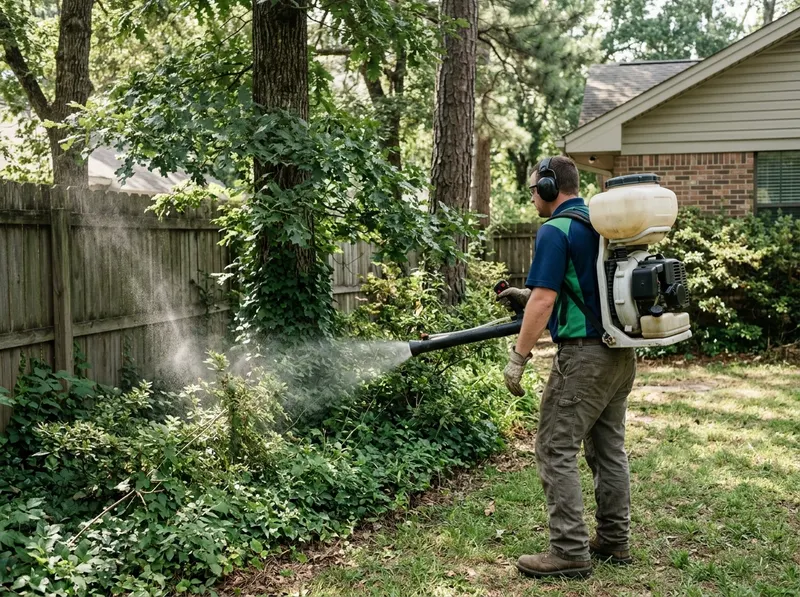
Seasonal mosquito management targets resting zones in shaded ornamental vegetation, low tree canopies, architectural overhangs, and dense ground cover. Technicians apply long-lasting micro-encapsulated adulticides and water-soluble biological larvicides to non-draining zones to suppress biting populations from April through October. Using commercial gas-powered mist blowers, treatments coat the undersides of broadleaf shrubs, ivy patches, and landscape borders where adult mosquitoes shelter from daytime heat and wind. Larvicide briquettes placed in French drains, gutter catch basins, and low-lying landscape swales prevent mosquito pupae from maturing into biting adults after heavy seasonal rainfall.
Get a quote →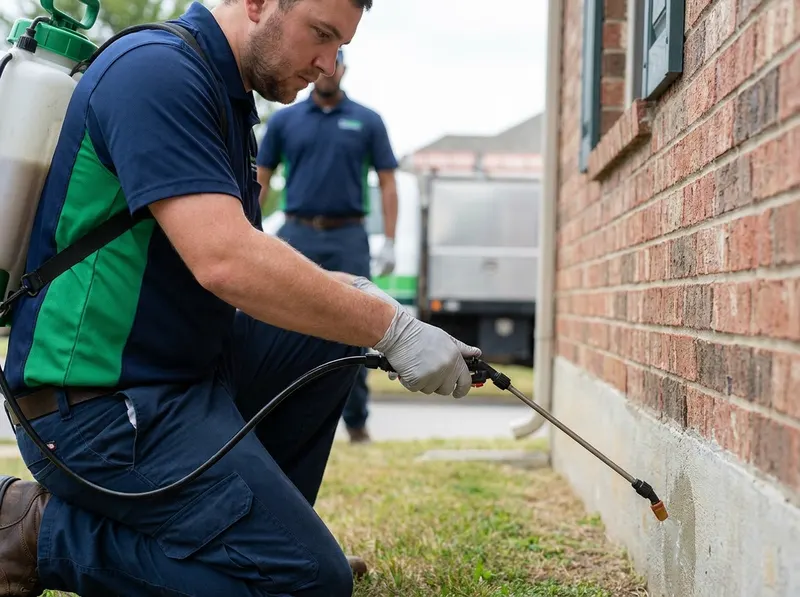
Targeting perimeter invaders including smokybrown roaches, silverfish, crickets, millipedes, and centipedes, this defense applies a 10-foot chemical and granular barrier surrounding the structure. Treatments penetrate heavy mulch, pine straw beds, and exterior concrete sidewalks before pests migrate across foundation thresholds. Technicians apply specialized water-activated pyrethroid granules to landscape beds alongside a targeted liquid suspension applied three feet up the exterior foundation wall and two feet outward onto the soil. This dual-action barrier neutralizes nocturnal crawling pests as they emerge from organic matter in search of moisture around brick weep holes and garage door weatherstripping.
Get a quote →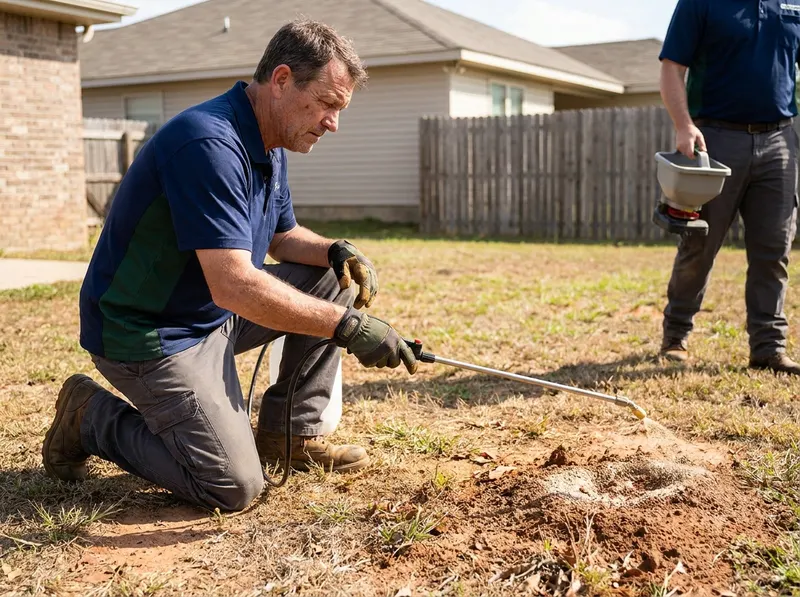
Complete yard protection incorporates broadcast bait applications formulated with hydramethylnon or methoprene across turfgrass areas. Targeted contact drenching is administered directly to high-risk satellite mounds near patios, HVAC pads, playgrounds, and walkways to ensure queen elimination. Technicians meter bait granules using calibrated rotary spreaders during periods of active worker foraging when ground temperatures remain between 70 and 90 degrees Fahrenheit. The slow-acting bait matrices are carried deep beneath the surface into queen chambers, sterilizing the reproductive colony and collapsing underground mound networks across the entire property within two to three weeks.
Get a quote →You get a firm, itemized quote for your pest control service before any work begins, no surprises, no pressure.
Careful prep, tidy work, and a full cleanup when we are done. We treat your home and belongings like our own.
The same trusted, background-checked team from the first call to the final check.
Selecting the correct structural treatment depends directly on pest biology, architectural construction type, and seasonal environmental pressure. If subterranean termites or carpenter ants threaten load-bearing wood framing along slab footings or crawl space sill plates, choose continuous liquid termiticide perimeter trenching or non-repellent sub-slab injection rather than topical timber sprays. If German cockroaches, brown recluse spiders, or odorous house ants are active inside wall voids, cabinetry chases, and food prep areas, choose targeted micro-injection and gel bait matrix placement rather than broad-spectrum surface sprays.
If roof rats, Norway rats, or field mice are entering crawl spaces, drop ceilings, and attic blown-in insulation during seasonal autumn temperature drops, choose complete mechanical exclusion with structural sealing rather than relying solely on interior rodenticide bait boxes. The trade-off centers on upfront mechanical labor versus maintenance frequency: exterior physical exclusion requires labor-intensive entry-point sealing across foundation penetrations, roof returns, and masonry gaps, whereas perimeter chemical treatments provide rapid seasonal deterrence but require scheduled liquid renewals as ultraviolet solar exposure, dense pine straw, and high summer rainfall degrade exterior active residues over 60 to 90 days. For properties built over low-clearance crawl spaces with exposed red clay soil, combining exterior ground trenching with interior moisture-reduction barriers delivers the highest longevity against structural infestation.
Every project gets a firm, written price after a free on-site visit. Ranges below for orientation.
Tell us about your pest control service job and we'll send a clear, written quote, usually the same day. Or just call and talk to a real Rock pro.
(501) 264-6768
The diverse topography of Rock creates distinct structural pest vulnerabilities across Pulaski County. Properties bordering Boyle Park, Rock Creek, and the low-elevation drainage pathways of the Arkansas River face immense ambient moisture loads, driving dampwood termites, smokybrown roaches, and seasonal mosquito breeding directly into foundation weep screeds, crawl space vents, and garage threshold seals. Meanwhile, the historic craftsman homes and older stone foundations in Hillcrest and Stifft Station feature unsealed sandstone piers, mortar decay, and mature oak canopies that provide direct highway access for roof rats and carpenter ants into second-story soffit returns. Further west along Cantrell Road and Chenal Parkway, the dense, shifting clay soils of Chenal Valley and Pleasant Valley expand and contract under fluctuating seasonal rainfall. This cyclical soil movement cracks slab expansion joints, creating subterranean highway access that pulls eastern subterranean termites deep into interior wall studs and kitchen plumbing chases. Foundation construction throughout the region, ranging from 1920s suspended timber floors in Capitol View to expansive hillside walkout basements in The Heights near Cammack Village, demands localized structural inspections tailored specifically to each home's architectural age and underlying soil profile. In addition, residential proximity to dense wooded parks and landmarks like Pinnacle Mountain State Park, Riverfront Park, War Memorial Stadium, Two Rivers Park, and the Little Rock Zoo ensures constant rodent and perimeter insect pressure that standard surface sprays cannot resolve without targeted mechanical exclusion.
Free estimates for Rock & the surrounding area.
 Miresto Pest Guard